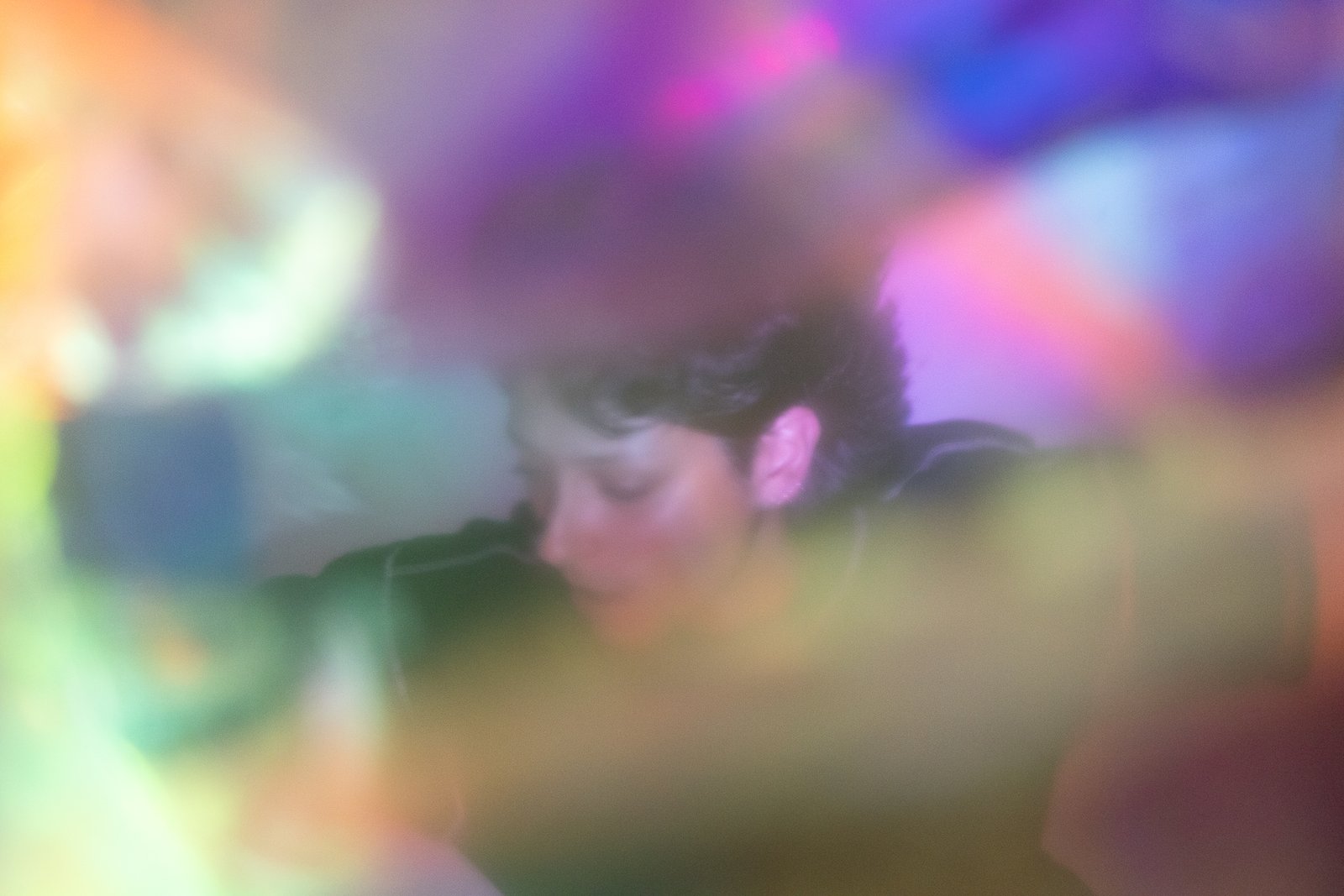
A body of work examining queerness through glitch, system error and fluid embodiment.
Modelling opportunities are now open for Unfixed: Queer Interference.
TFP experimental studio photoshoot on Saturday 22 August, between 2pm and 8pm. Modelling experience is preferred but not required.
Register your interest to take part in the project.
Glitch as refusal
Within the project, the glitch is not approached as a technical mistake to be corrected. It becomes a form of interruption.
In technological systems, a glitch marks a failure to perform correctly. Unfixed: Queer Interference draws on glitch feminism to reconsider this failure as a space of resistance and possibility. The work explores queerness as something that can interrupt fixed systems of gender, visibility and social performance, creating openings where alternative ways of being can emerge.
Distortion, blur, abstraction and fragmentation are used as forms of strategic illegibility. Bodies become unstable signals rather than fixed images, resisting the pressure to remain singular, readable or easily categorised. Interference, ghosting and slippage are not used to erase the subject, but to create space for multiplicity, ambiguity and transformation.
Rather than presenting identity as coherent or fully resolved, the work embraces buffering, disruption and instability as generative states.

The glitch is not a mistake to be corrected. It becomes a form of interruption.
Fluid systems and organic interference
Although informed by technological aesthetics, the project is also shaped by organic forms and material processes.
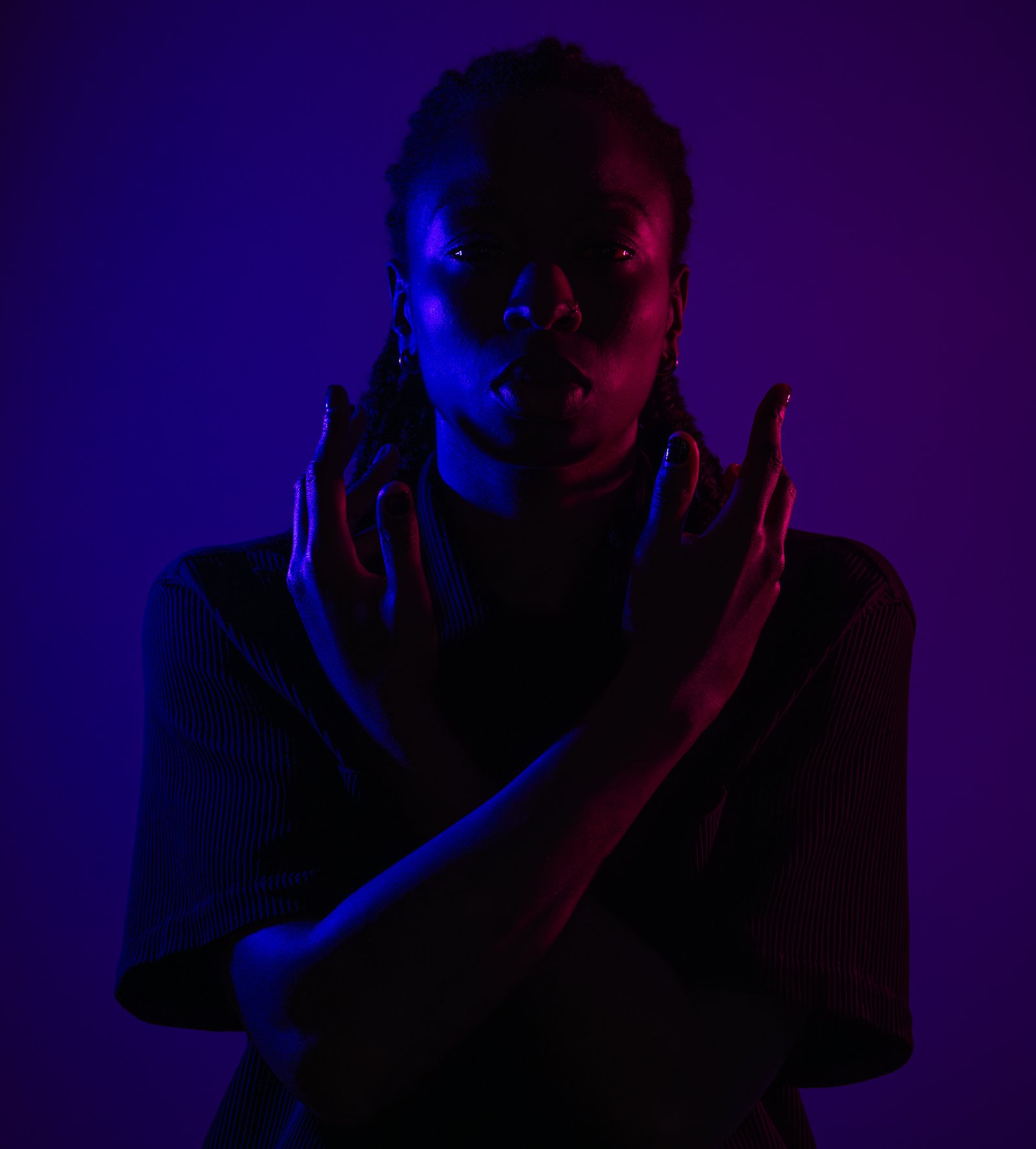
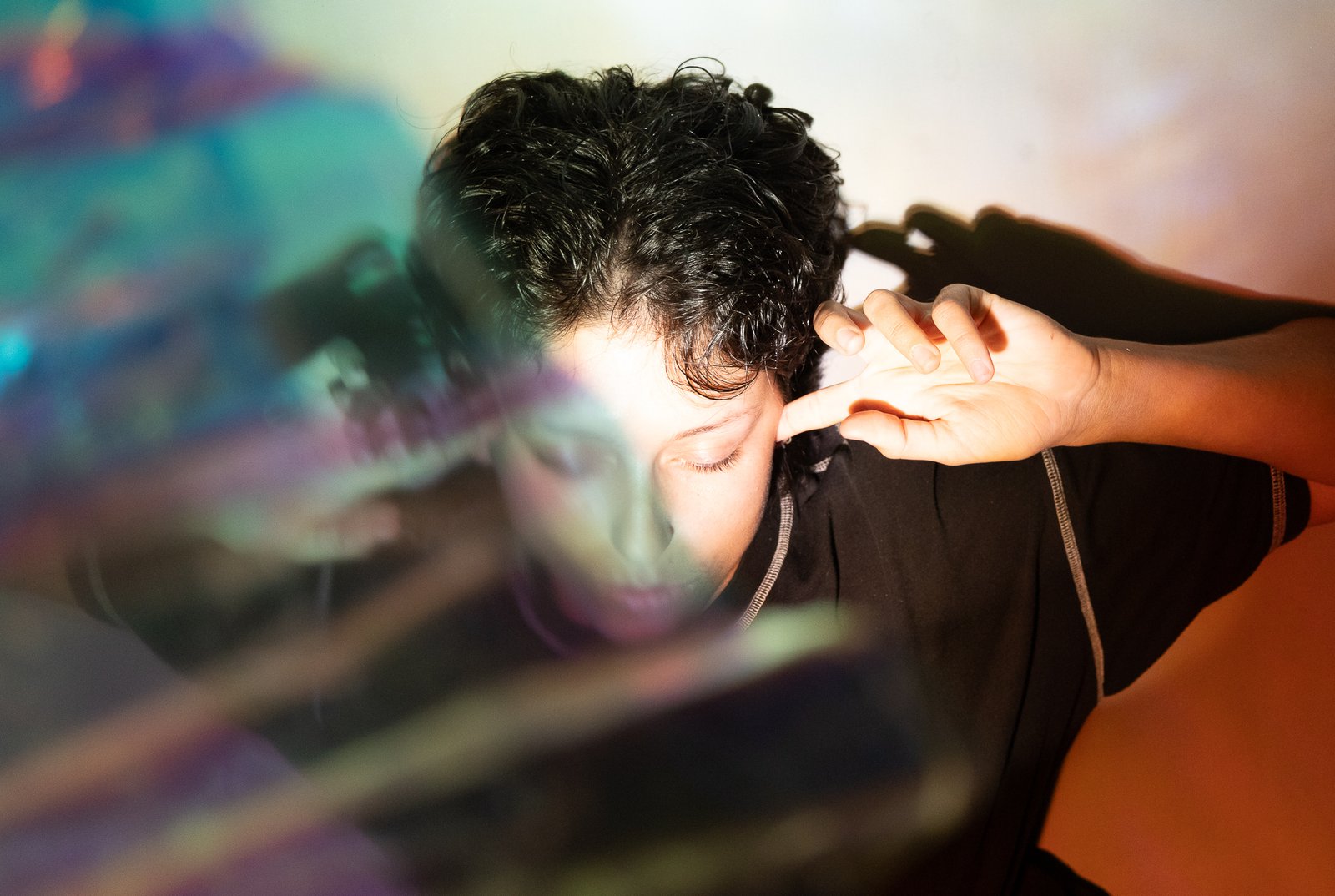
Shifting light, shadows, reflections, water and fluid movement create images that feel unstable, immersive and difficult to contain. Colours bleed into one another, bodies dissolve into motion and projected light moves across skin like liquid surfaces or unstable data streams.
This tension between technological systems and organic embodiment is central to the work. The images move between machine and body, structure and softness, signal and atmosphere. Rather than treating technology as separate from the body, the project approaches both as entangled systems capable of transformation, mutation and disruption.
Visual language and image-making
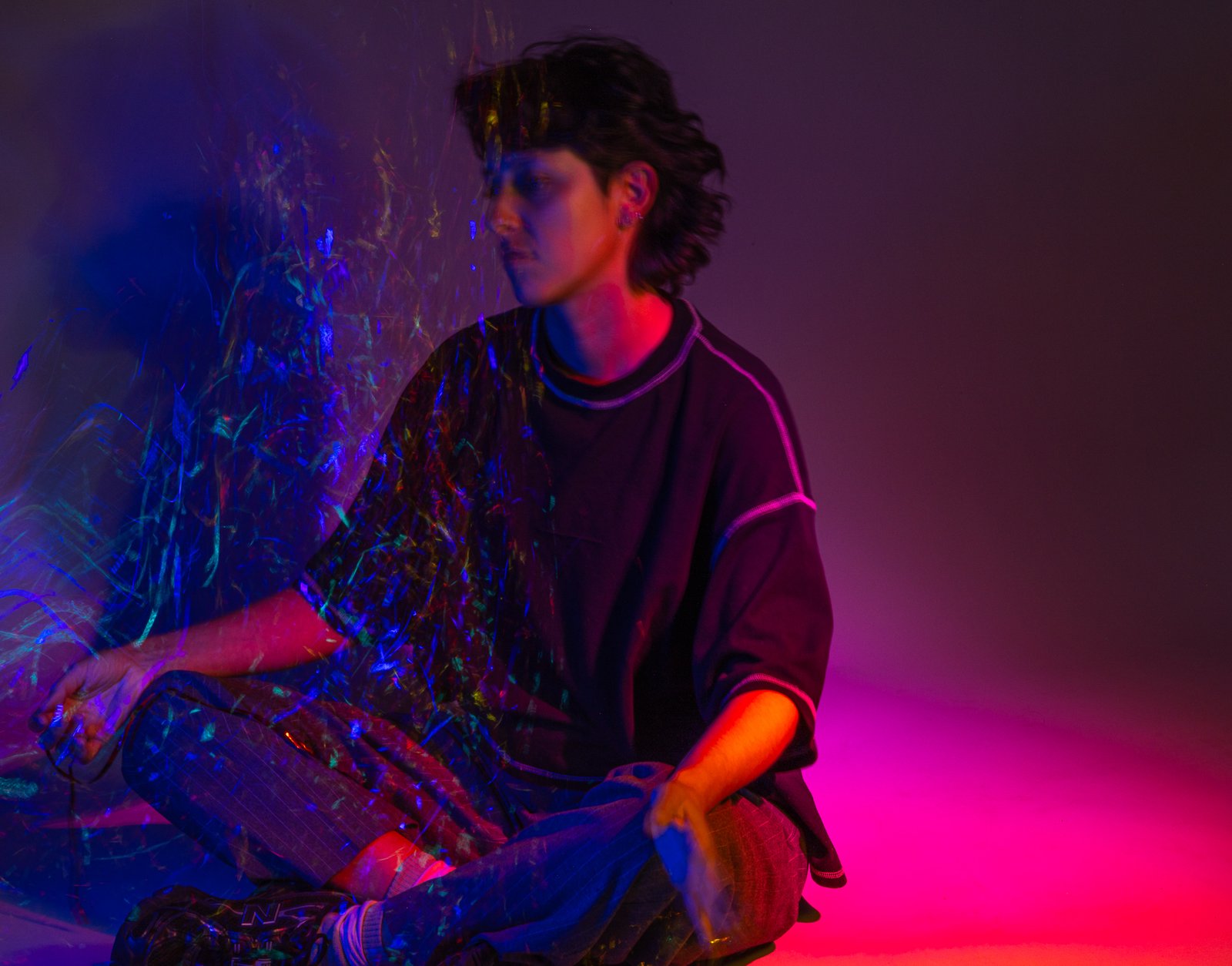
The visual language of the project draws on abstraction, chromatic interference, scan distortions, projected imagery and intentional camera movement to create portraits that exist between visibility and disappearance.
Some images may appear partially corrupted, doubled, fragmented or stretched through movement and layered exposure. Others may use projection, coded imagery, reflective materials or translucent surfaces to create shifting relationships between body, light and system.
The work is interested in what happens when the image stops functioning as a stable document and instead becomes unstable, porous and in motion. Through these disruptions, the project explores how photography can move beyond representation into states of interference, transformation and speculative embodiment.
Research context
The project is informed by glitch feminism, cyberfeminism and xenofeminism, particularly ideas surrounding strategic illegibility, nonperformance and the body as mutable and technologically mediated. It draws on the writings of Legacy Russell alongside earlier cyberfeminist practices such as VNS Matrix, whose manifesto described feminist intervention as a viral force capable of disrupting dominant technological systems.
The work also connects to artists and theorists exploring abstraction, surveillance, identity, technological embodiment and queer opacity. References include Zach Blas’s collective masks and Facial Weaponization Suite, which use amorphous forms to resist biometric recognition systems, alongside Victoria Sin’s exploration of gender as assemblage and performance.
The project also draws inspiration from experimental photographic practices including intentional camera movement, scan art, projection, chromatic distortion and layered image-making processes that destabilise the image while retaining bodily and emotional presence.