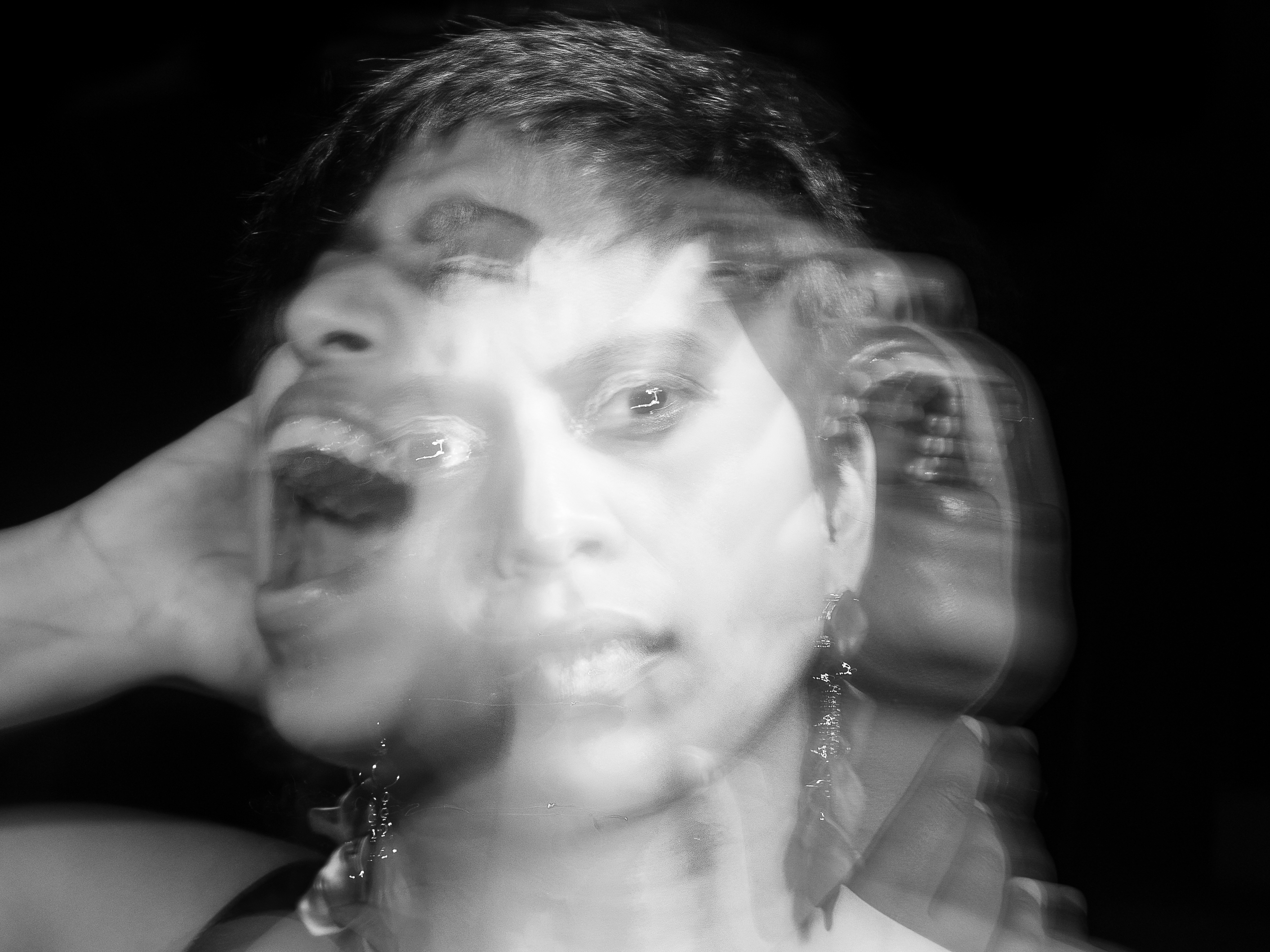
A photographic series exploring queer femininity, visibility, and the tension between vulnerability and defiance.
Conceptual framework
Held in the Blur explores the unstable space between visibility and protection. The portraits resist the expectation that identity must always be clear, readable, or easily interpreted. Instead, the images sit within moments of uncertainty where the subject remains partially obscured.
For queer and feminine-presenting people, visibility can be complex. Being seen can mean recognition and affirmation, but it can also invite scrutiny or misinterpretation. The blurred portrait becomes a way to hold this tension. Rather than presenting identity as fixed or transparent, the work embraces ambiguity as a space where complexity can exist.
In this series, distortion is not used simply as a visual effect. It functions as a conceptual tool that disrupts the viewer’s attempt to fully capture or define the subject. The image resists clarity in the same way that identity resists simple categorisation.
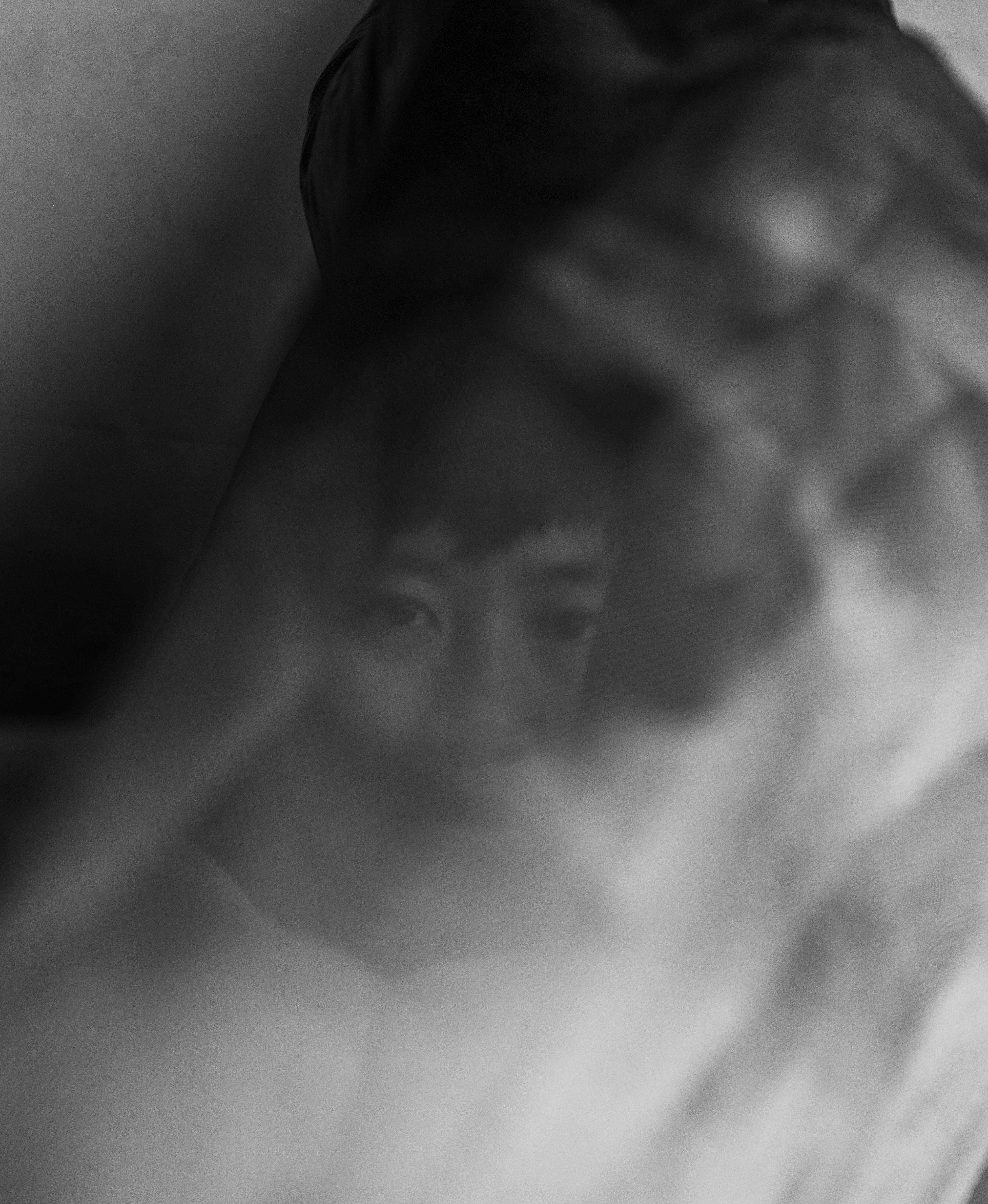
Held in the Blur — fabric as a soft barrier between the subject and the viewer.
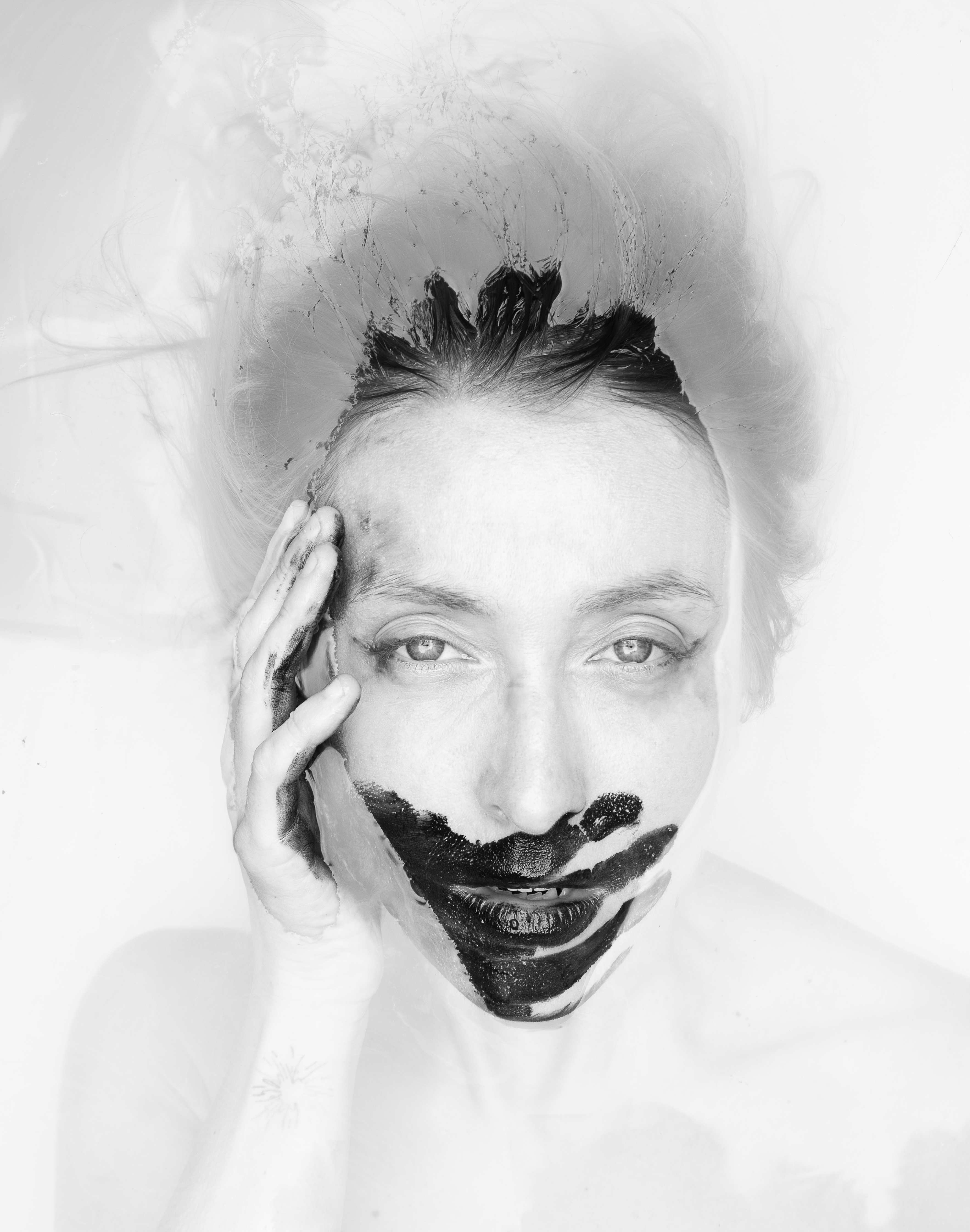
Held in the Blur — water creating a soft, shifting distortion across the face.
Vulnerability, resistance, and self-expression can exist at the same time.
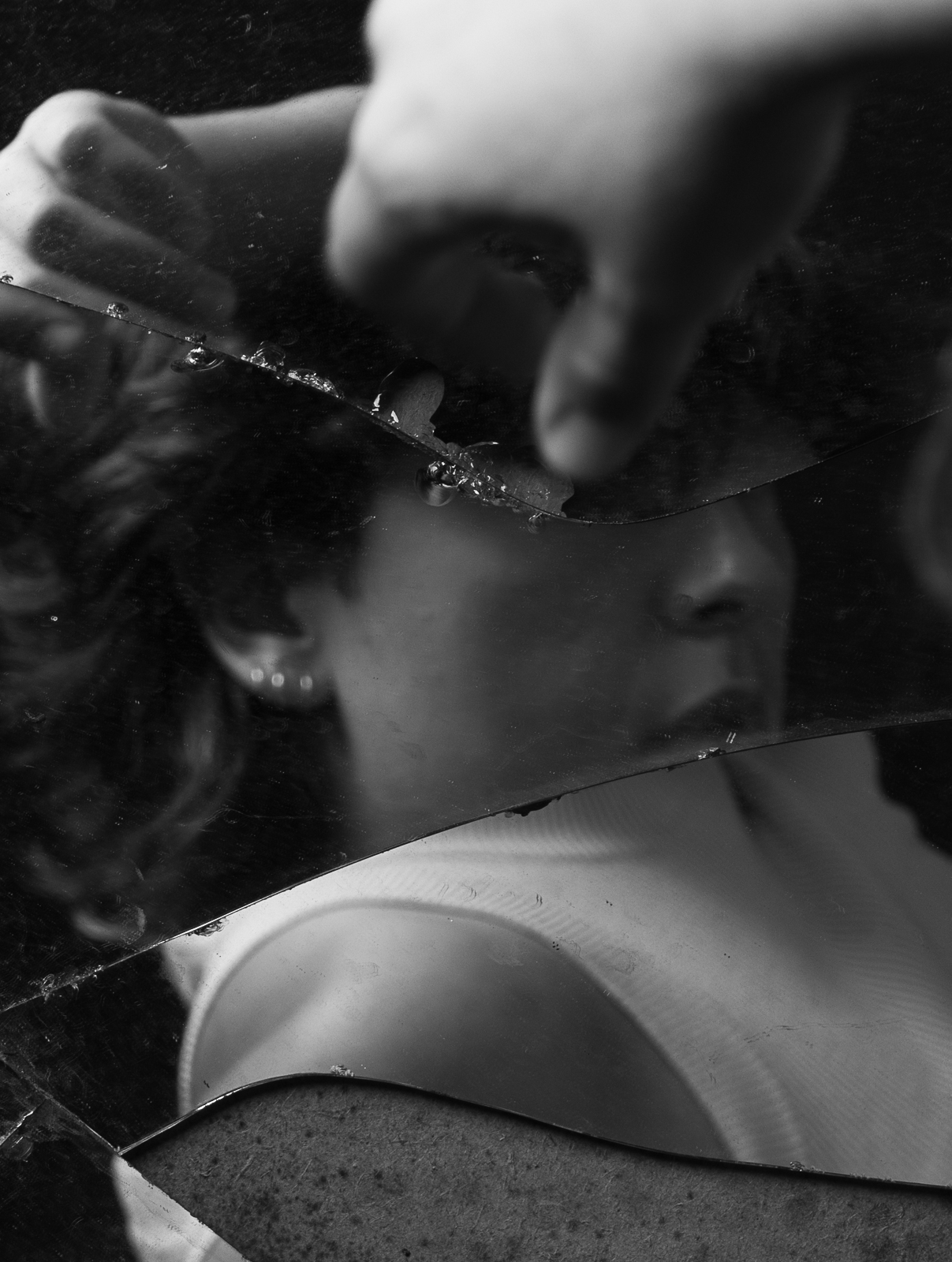
Held in the Blur — mirror fragments multiplying and distorting the face.
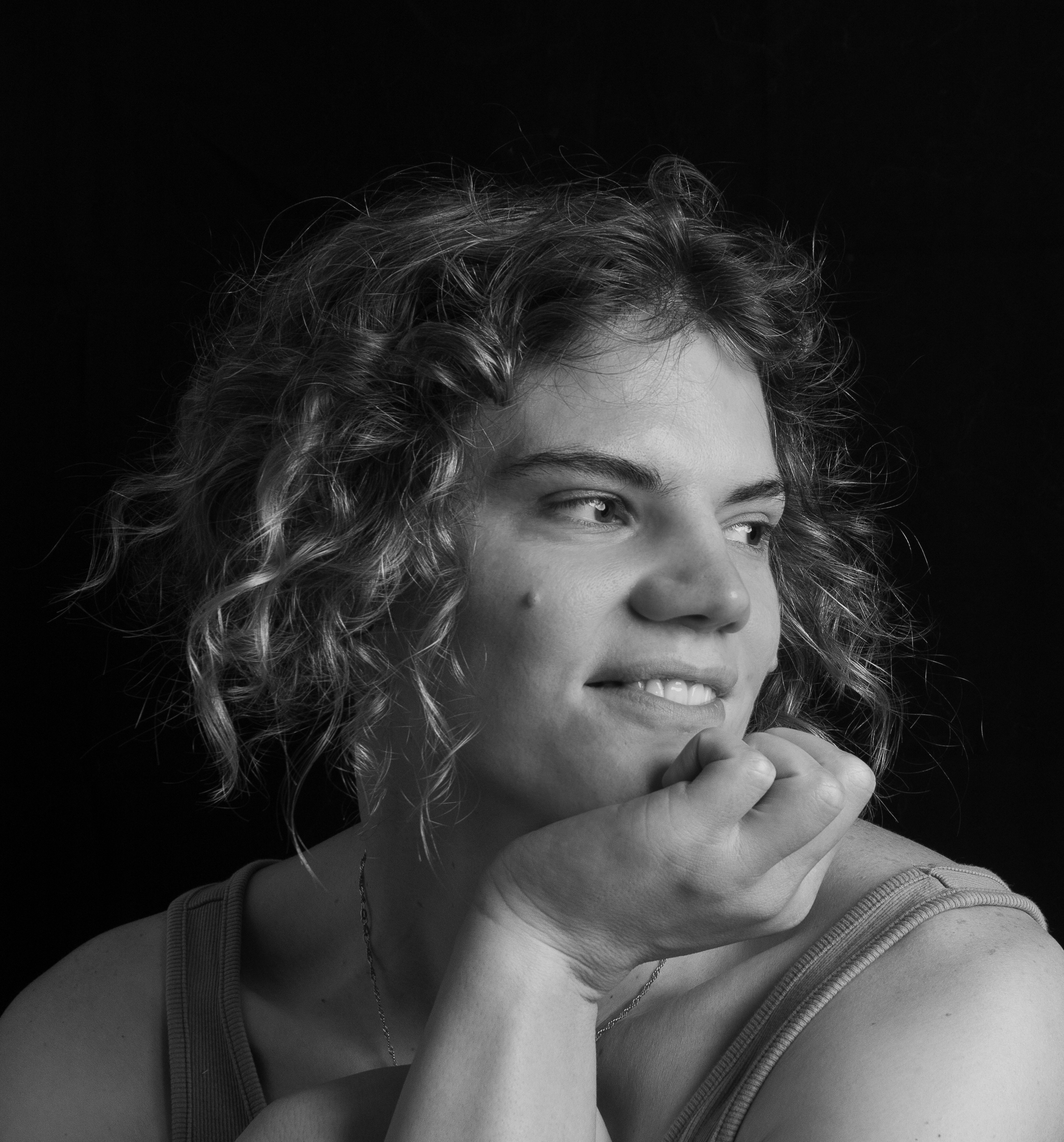
Held in the Blur — a gesture of refusal and self-protection.
Beauty, distortion and the politics of the face
Portrait photography has historically been linked to recognition, identity, and the idea that the face reveals the self. Beauty standards in photography often rely on clarity, symmetry, and the full visibility of the face. Held in the Blur challenges these conventions by introducing distortion, fragmentation, and concealment.
When the face becomes partially obscured or blurred, the viewer can no longer rely on traditional cues of identity. This disruption invites viewers to question how much meaning we place on the face as a marker of truth, beauty, and individuality.
Distortion in this project opens space for alternative representations of femininity. Rather than presenting beauty as something fixed and easily readable, the work explores beauty as something shifting, emotional, and resistant to simple interpretation.
Queer opacity and refusal of the gaze
In many visual traditions, the viewer is positioned as someone who has the power to observe, interpret, and define the subject. Queer and feminist artists have often challenged this dynamic by creating images that interrupt or refuse the gaze.
In Held in the Blur, the subject is not always fully available to the viewer. Faces are blurred, gestures redirect attention, and mirrors fragment the image. These strategies create a form of opacity where the subject remains partially unreadable.
This approach resonates with ideas from queer theory about the right to remain ambiguous or undefined. Rather than offering a clear narrative about identity, the images hold space for complexity and uncertainty.
The portraits therefore do not aim to explain queer femininity. Instead, they create a visual language where identities can remain layered, fluid, and resistant to easy categorisation.
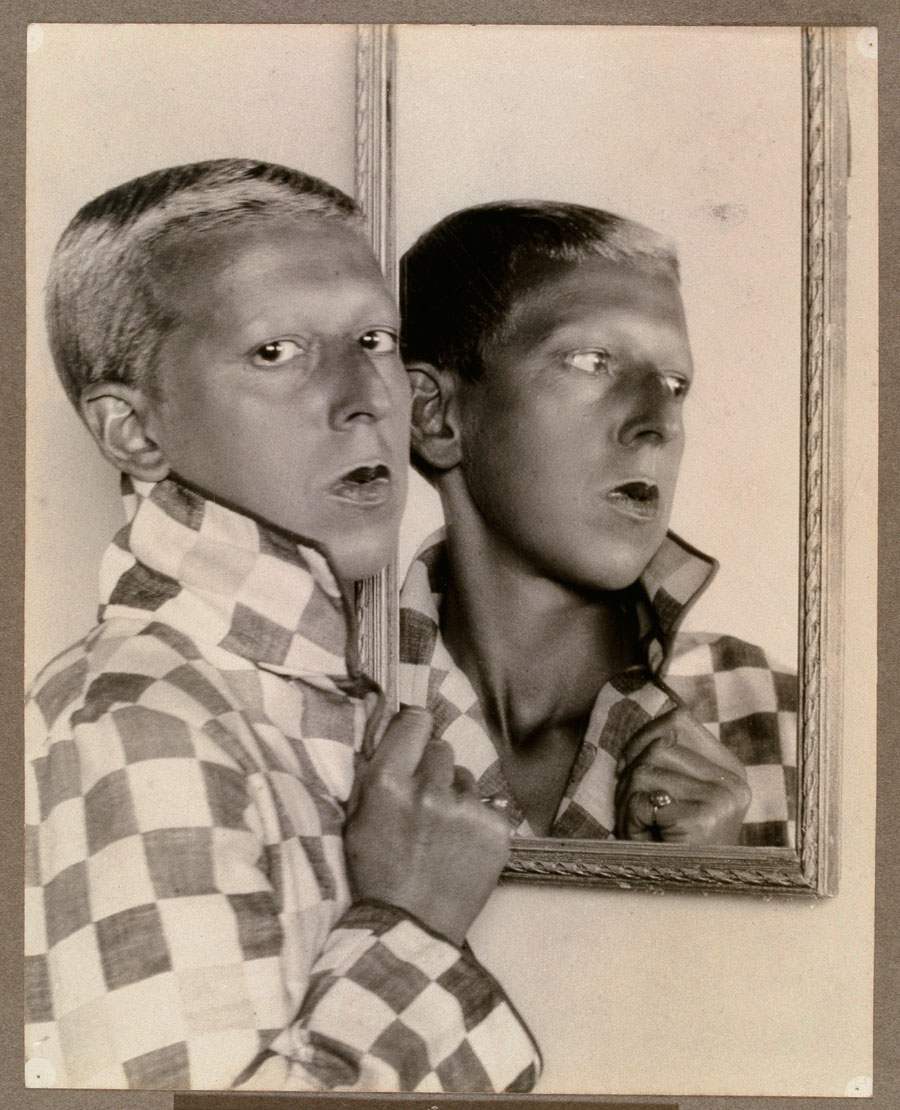
Claude Cahun (French, 1894–1954) — Self-portrait (reflected image in mirror with chequered jacket), 1927, silver gelatin print. Source: Art Blart — https://artblart.com/tag/claude-cahun-autoportrait-1928/
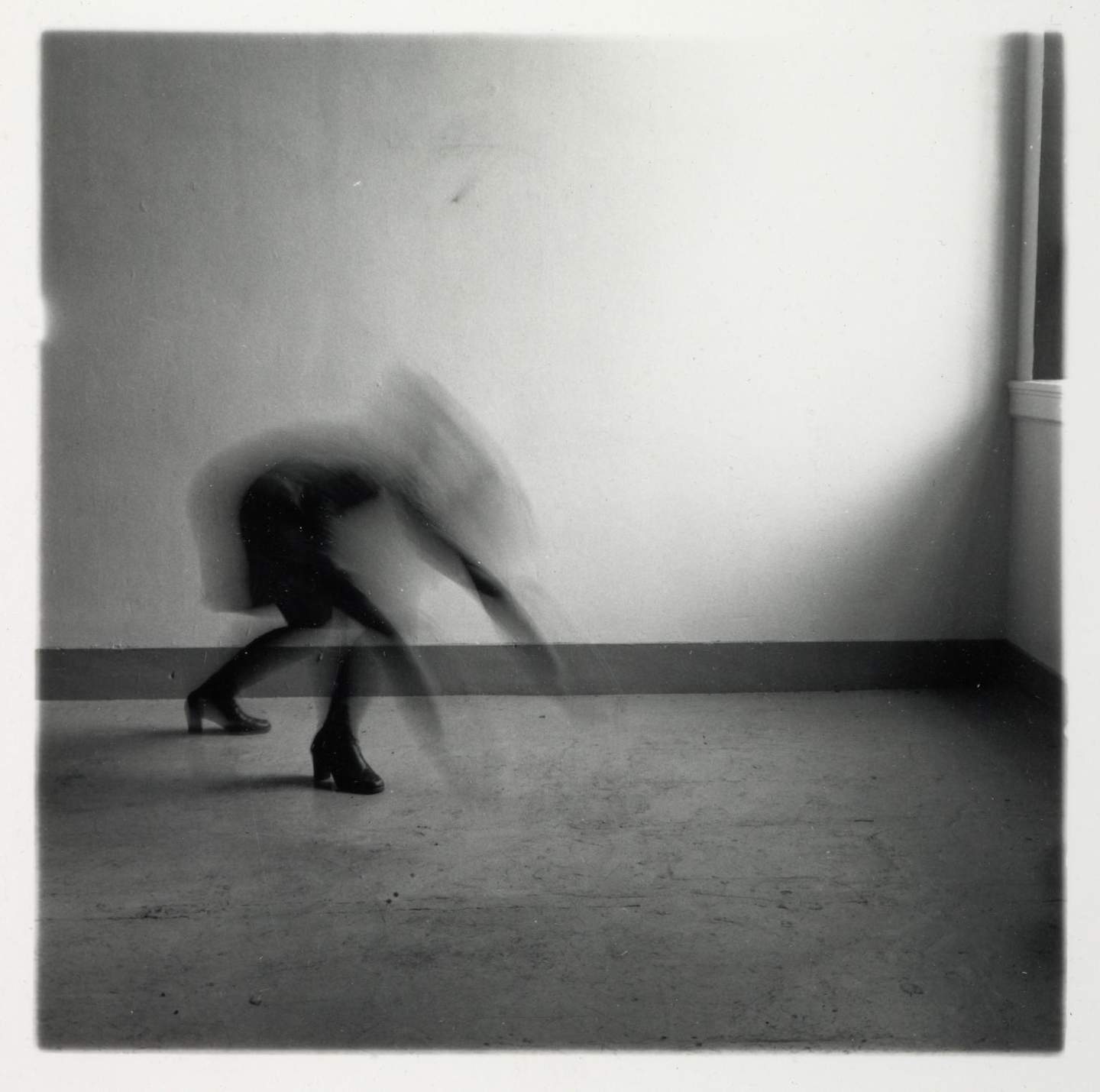
Francesca Woodman — Space², Providence, Rhode Island (1976), ARTIST ROOMS Tate and National Galleries of Scotland. © Woodman Family Foundation / Artist’s Rights Society (ARS), New York and DACS, London.
Research context
The project sits within a broader tradition of artists who use photography to question identity, representation, and the gaze. Early queer artist Claude Cahun used masks, mirrors, and fragmented self-portraits to challenge fixed ideas of gender and identity. Their work demonstrated how photography can destabilise the relationship between the body and the image.
Other artists such as Francesca Woodman explored blurred bodies, long exposures, and partial concealment to create photographs where the figure appears to dissolve into space. Contemporary artists like Zanele Muholi and Catherine Opie have also expanded conversations around queer identity, visibility, and representation through portraiture.
The project is also informed by feminist and queer writing about the gaze and representation. Essays such as Laura Mulvey’s “Visual Pleasure and Narrative Cinema” examine how visual culture shapes the way bodies are seen and interpreted. bell hooks’ “The Oppositional Gaze” explores the power dynamics of looking and being looked at.
Ideas of opacity and ambiguity from Édouard Glissant’s writing on the “right to opacity” also resonate with the project. These ideas suggest that people should not always be required to make themselves fully visible or understandable to others.
Through distortion, gesture, and partial concealment, Held in the Blur contributes to this ongoing conversation about identity, visibility, and the politics of representation.